Looking for ev chargers with rfid access that make charging more secure and easier to manage? The right setup can help control who can use the charger, reduce unwanted use, and simplify charging for shared driveways, fleets, rentals, or multi-driver homes.
Below, we focus on practical options that balance charging speed, installation style, cable length, and access control so you can choose a charger that fits your home and daily routine.
Best 10 Ev Chargers with Rfid Access Picks for 2026
RFID Security Pick

- RFID start/stop access
- 4.3-inch LCD status display
- Adjustable 10A to 40A output
Best For: Home users wanting RFID access and clear charging feedback
Accessory Add-On

- Two RFID cards included
- Fits wallet or pocket
- For compatible Autel chargers
Best For: Autel charger owners needing spare access cards
Smart Connected Pick

- App control with scheduling
- UL, ETL, FCC, Energy Star certified
- IP66 / NEMA 4 weatherproof design
Best For: Connected home charging with weather-resistant construction
Flexible Power Pick
Upgraded Level 2 EV Charger 40A/48A

- Plug-in 40A or hardwired 48A
- App supports RFID card mode
- Power sharing and load balancing
Best For: Homes wanting flexible installation and smart RFID controls
Smart RFID Pick
WOLFBOX 40A Level 2 Charger with App Control

- RFID card, app control, and plug-and-charge
- CSA/FCC certified with 8 protections
- 25-foot cable and NEMA 4X housing
Best For: Homes that want shared-access charging with flexible control options
Utility-Ready RFID Choice
IYILO 48A Smart Level 2 EV Charger

- RFID card support with app scheduling
- 48A hardwired charging with adjustable current
- Connector overheat protection and power sharing
Best For: Homeowners wanting high-output RFID charging with utility-minded features
Secure Access Value
Grasside 40A J1772 Wall Charger

- RFID card, app, and plug-and-charge modes
- UL-2594/CSA-C22.2 certified with IP65 rating
- 25-foot cable with metal case
Best For: Plug-in buyers who want RFID access and basic smart controls
Top High-Power Home Option

- Up to 48A / 11.5kW charging
- Adjustable current and app scheduling
- UL 2594-certified, IP65 weatherproof
Best For: Drivers who want a fast, hardwired Level 2 charger for daily home use
Best Portable Smart Pick
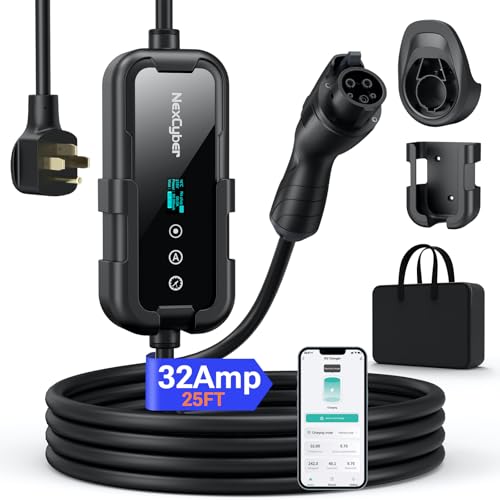
- Portable 32A charging with NEMA 14-50 plug
- WiFi app and touchscreen controls
- ETL/FCC certified with 25 ft cable
Best For: Drivers who want a portable plug-in charger with app scheduling
Best Premium Hardwired Choice

- Up to 48A on a dedicated 60A circuit
- Free app with scheduling and energy tracking
- IP66 / NEMA 4 sealed housing
Best For: Homeowners who want a premium hardwired charger with app control
RFID Security Pick – J1772 Level 2 EV Charger 40A
If you’re comparing ev chargers with rfid access for a home setup, this J1772 Level 2 unit stands out for blending authorized start/stop control with strong everyday charging speed. It offers up to 40A output, a 25ft cable, and a 4.3-inch LCD that keeps the charging status easy to read.
Best For: Drivers who want RFID access, a clear display, and flexible home charging controls.
Pros:
- Optional RFID card start/stop helps prevent unauthorized use.
- Adjustable amperage from 10A to 40A supports different charging needs.
- 4.3-inch LCD shows charging rate, temperature, current, voltage, power, and charge time.
- 25ft cable and integrated storage make garage use more convenient.
Cons:
- Tesla vehicles need an adapter, which is not included.
- Requires a compatible J1772 vehicle for direct use.
This is a practical choice if you want RFID-controlled access plus visibility into charging activity without adding extra accessories. It looks especially useful for households that want scheduled charging and a tidy wall-mounted setup.
Accessory Add-On – Autel RFID Cards, 2-Pack
If you already use compatible Autel charging hardware, these ev chargers with rfid access cards are the simplest way to keep authorization on hand. The cards are lightweight, pocket-friendly, and designed for convenient use with compatible Autel EV chargers.
Best For: Current Autel charger owners who need extra RFID cards for access control.
Pros:
- Two-pack gives you a spare card or a second authorized user.
- Lightweight plastic cards fit easily in a wallet or pocket.
- Designed for compatible Autel EV chargers.
Cons:
- Only works with compatible Autel charging stations.
- Not a charger itself, so it won’t help if you need hardware.
This is a straightforward add-on if your goal is better access management rather than a new charging station. It makes sense for households or shared setups that want simple RFID authorization in a small, easy-to-carry format.
Smart Connected Pick – EVIQO Level 2 EV Charger 40A
For shoppers looking at ev chargers with rfid access alongside app control, this EVIQO Level 2 model combines remote features with broad J1772 compatibility. It delivers up to 40A, uses a 25ft cable, and adds a 2.4 GHz WiFi app for start/stop control, scheduling, and energy tracking.
Best For: Drivers who want app-based charging control, overnight scheduling, and dependable outdoor-ready hardware.
Pros:
- Supports J1772 EVs and plug-in hybrids with no adapter needed for non-Tesla vehicles.
- Free app allows start/stop control, amperage adjustment, reminders, and cost tracking.
- Certified by UL, ETL, FCC, and Energy Star, with IP66 / NEMA 4 weatherproofing.
- Includes a glow-in-the-dark holster for easier nighttime docking.
Cons:
- Requires 2.4 GHz WiFi for app features.
- Tesla drivers need the car’s J1772 adapter.
This model is a strong fit if you want more than basic access control and prefer connected charging tools. The sealed housing, long cable, and certified design make it appealing for garages or outdoor installations.
Flexible Power Pick – Upgraded Level 2 EV Charger 40A/48A
This upgraded model is a versatile option for buyers comparing ev chargers with rfid access and smarter load management features. It ships with a NEMA 14-50 plug but can also be hardwired for faster 48A / 11.5 kW charging, and its app adds scheduling, energy tracking, multiple user accounts, and RFID card support.
Best For: Households that want flexible installation options and RFID-enabled smart charging controls.
Pros:
- Supports both plug-in 40A use and hardwired 48A charging.
- App includes RFID card mode, scheduled charging, and time-of-use tools.
- Dual temperature sensors add thermal monitoring during high-power charging.
- Supports power sharing and dynamic load balancing with an energy meter bundle.
Cons:
- 5GHz WiFi is not supported.
- Fastest 48A mode requires hardwired installation.
If you want a charger that can grow with your setup, this one offers real flexibility in both installation and power output. The RFID feature, smart app controls, and utility program support make it a practical long-term home charging choice.
Smart RFID Pick – WOLFBOX 40A Level 2 Charger with App Control
If you want ev chargers with rfid access for easy shared use at home, this WOLFBOX Level 2 unit combines RFID card control, app scheduling, and plug-and-charge convenience. It also adds a 25-foot cable, adjustable amperage, and a weather-resistant enclosure, making it a practical fit for everyday residential charging.
Best For: Households that want multiple ways to start charging, including RFID cards, without giving up app control.
Pros:
- Supports app control, RFID card access, and plug-and-charge
- CSA and FCC certified, with 8 stated electrical protections
- 25-foot cable and NEMA 4X housing for flexible placement and weather resistance
- Scheduling and cost tracking features help manage off-peak charging
Cons:
- Requires manual dial-code adjustment to match your panel
- Uses J1772, so Tesla drivers need a NACS adapter
Overall, this is a strong option if you want straightforward RFID access alongside app-based controls and a safety-focused feature set. The 40A output and long cable make it especially handy for typical home garages and driveways.
Utility-Ready RFID Choice – IYILO 48A Smart Level 2 EV Charger
For shoppers comparing ev chargers with rfid access, this IYILO Level 2 model stands out with RFID card support, app scheduling, and adjustable current from 6A to 48A. It is a hardwired charger designed for fast home charging, while also adding connector temperature monitoring and power-sharing features for more advanced setups.
Best For: Buyers who want RFID access plus utility-program support and higher-output home charging.
Pros:
- Supports RFID card charging, scheduled charging, and app control
- Adjustable from 6A to 48A, with up to 46 miles of range per hour at 48A
- Built-in connector overheat protection with NTC temperature sensing
- Power sharing and dynamic load balancing support smarter multi-charger setups
Cons:
- Hardwired installation requires a 60A breaker and licensed electrician
- App supports 2.4GHz WiFi only
This charger is a good fit if you want a feature-rich RFID-enabled unit and plan to take advantage of utility programs or advanced load management. Its higher output and safety monitoring make it feel more like an upgrade-oriented home charging station than a basic plug-in unit.
Secure Access Value – Grasside 40A J1772 Wall Charger
If you’re looking for ev chargers with rfid access in a simple plug-in format, this Grasside Level 2 charger is built around a NEMA 14-50 connection and includes RFID card authentication, Smart App control, and plug-and-charge modes. It adds a 25-foot cable, adjustable current, and a metal case, giving it a practical mix of convenience and security for home charging.
Best For: Drivers who want RFID-based access control on a plug-in Level 2 charger.
Pros:
- Supports plug-and-charge, RFID card authentication, and app unlocking
- UL-2594/CSA-C22.2 certified with IP65 waterproof rating
- 25-foot UL-listed cable and durable metal housing
- App offers current adjustment, scheduling, and charging history
Cons:
- Requires a compatible NEMA 14-50 outlet and 50A circuit breaker
- App WiFi support is limited to 2.4GHz
- Tesla vehicles need a separate adapter
As a whole, this model is a solid value play for buyers who want RFID access without a hardwired install. The combination of security, cable length, and app controls makes it easy to fit into a typical residential charging routine.
Top High-Power Home Option – 48A Hardwired J1772 Charger
If you want ev chargers with rfid access-style convenience in a smart home charger, this 48A hardwired unit focuses on speed, scheduling, and app-based control. It delivers up to 46 miles of range per hour, supports adjustable current, and includes real-time charging data so you can manage charging more precisely at home.
Best For: Drivers who want a fast, hardwired Level 2 charger with app controls and a long cable for daily home charging.
Pros:
- Up to 48A / 11.5kW charging for fast overnight top-ups
- Adjustable current from 10A to 48A in 1A increments
- Tracks voltage, current, power, energy usage, and charging history
- UL 2594-certified, IP65 weatherproof, and backed by a 3-year warranty
Cons:
- Hardwired installation requires a licensed electrician and a dedicated 240V / 60A circuit
- Tesla drivers need a separate J1772-to-NACS adapter
- No built-in RFID authentication is listed in the supplied specs
This is a strong pick if your priority is maximum home charging speed and detailed app control. It is less flexible than a plug-in unit, but the weatherproof build and long cable make it a dependable permanent setup.
Best Portable Smart Pick – 32A Plug-In WiFi Charger
For buyers comparing ev chargers with rfid access features, this portable Level 2 model stands out for its WiFi app tools, touchscreen controls, and plug-in convenience. It uses a NEMA 14-50P plug, delivers up to 32A charging, and gives you a straightforward way to manage charging at home or on the go.
Best For: Drivers who want a portable plug-in charger with app scheduling and a clear touchscreen interface.
Pros:
- Portable 32A Level 2 charging with a NEMA 14-50 plug
- WiFi app supports charging cost, history, notifications, and charging periods
- Touchscreen shows amperage, charging speed, input voltage, and delay time
- ETL/FCC certified with a 25 ft cable and NEMA Type 4 / IP66-level protection
Cons:
- Not designed for Tesla/NACS without an adapter
- Professional installation is recommended for best safety and performance
- The product notes do not mention RFID access support
This is a practical choice if you want a portable charger that is easy to monitor and configure. It does not offer the highest amperage in the group, but the combination of app control and plug-and-play setup makes it versatile.
Best Premium Hardwired Choice – 48A App-Control Charger
Among ev chargers with rfid access searches, this hardwired Level 2 station is a premium app-controlled option built for steady home charging. It supports up to 48A on a dedicated 60A circuit, includes a 25 ft cable, and offers remote control plus charging reminders through the app.
Best For: Homeowners who want a hardwired charger with strong app control, high output, and weatherproof construction.
Pros:
- Hardwired design delivers up to 48A on a dedicated 60A, 240V circuit
- Free app lets you start/stop charging, set speed, and track energy use
- IP66 / NEMA 4 sealed housing for indoor or outdoor use
- 3-year warranty, U.S.-based support, and OTA WiFi updates
Cons:
- Requires professional hardwired installation
- Tesla charging still depends on the vehicle’s included adapter
- No RFID access feature is listed in the supplied product details
This model is a strong all-around home charger if you want reliable high-power charging and app management. It is especially appealing for users who value a sealed, weatherproof enclosure and a long support window.
How We Picked These Ev Chargers with Rfid Access
We focused on chargers and access components that offer real-world value for secure home charging. Priority went to units with strong output ratings, useful installation options, reliable connector compatibility, and access-control features that fit everyday use. We also considered cable length, smart controls, certification claims, and whether the product is better suited to single-user charging or shared access.
Quick Comparison
For most buyers, the main decision is between plug-in and hardwired installation, then choosing the right amperage for your vehicle and electrical setup. Some models are better for easy installation and portability, while others favor higher power and a cleaner permanent setup. If access control matters most, make sure the charger or accessory supports the RFID workflow you actually need rather than assuming every smart charger includes it.
Key Buying Factors for Ev Chargers with Rfid Access
Access Control Method
Not every product labeled for RFID use works the same way. Some chargers include built-in RFID authentication, while others rely on separate RFID cards or an app-based lock function. Confirm whether the charger supports tag-based authorization, and check whether extra cards are included or must be purchased separately.
Charging Speed and Amperage
Most home buyers will choose between 32A, 40A, and 48A units. A 32A charger is often enough for overnight top-offs, while 40A and 48A models better suit drivers with longer commutes or higher daily mileage. Match the charger to your panel capacity and electrician’s recommendation.
Installation Style
Plug-in models are easier to install and move, especially if you already have a NEMA 14-50 outlet. Hardwired units usually look cleaner and can be a better long-term choice for permanent home setups. Choose based on whether you want flexibility or maximum stability.
Cable Length and Placement
A 25-foot cable can make parking and garage layouts much easier, especially if the vehicle’s charge port is not close to the outlet or wall mount location. Longer cables add convenience, but make sure they do not create clutter or tripping hazards.
Who Should Buy Which Ev Chargers with Rfid Access?
If you want the simplest shared-use setup, choose one of the chargers or kits that supports controlled access and straightforward authorization. If your priority is speed, a 48A hardwired unit is usually the stronger long-term choice. If you need portability or an easier install, a 32A or 40A plug-in model may make more sense. Buyers comparing Ev Chargers with Rfid Access should think first about how the charger will be used day to day: private home, shared garage, rental property, or fleet-style access. The best pick is the one that matches both your electrical capacity and your access-control needs.