Choosing the right scanner can save time, money, and guesswork when a check engine light appears. For Japanese vehicles, the best options balance broad OBD2 coverage with the specific features that matter for Toyota, Honda, Nissan, Mazda, Mitsubishi, Suzuki, and more.
This roundup focuses on practical, buyer-friendly picks ranging from entry-level code readers to more capable diagnostic tools with live data, reset functions, and deeper system access.
Best 10 Car Diagnostic Scanners for Japanese Cars Picks for 2026
JDM Protocol Specialist
ANCEL JP700 JOBD Scanner for Japanese Cars

- Supports JOBD for many Japanese imports
- Reads/clears codes and shows live data
- I/M readiness helps with smog checks
Best For: Japanese import owners needing JOBD compatibility
Full-System Service Scanner
iCarsoft JP V2.0 for Japanese and Korean Cars

- Full-system diagnostics across major modules
- 9 service functions including reset and bleeding
- CAN-FD support with lifetime updates
Best For: Owners of compatible Japanese/Korean cars who need deeper diagnostics
Budget OBD2 Reader
Autel AL319 Check Engine Scanner
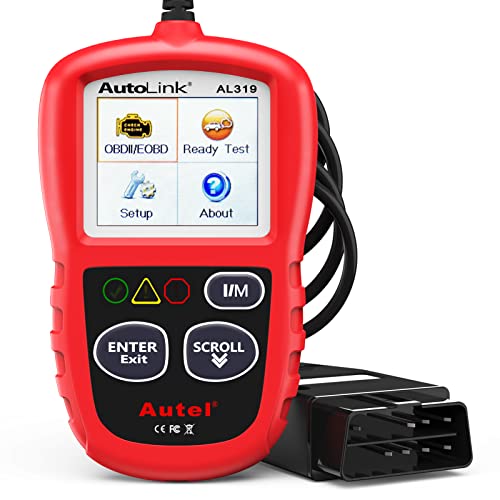
- Basic read/clear codes plus live data
- Works with many post-1996 Japanese cars
- Plug-and-play with one-click readiness
Best For: Drivers needing a simple, low-cost check engine reader
OE-Level All-Systems Tool
iCarsoft TYT V1.0 for Toyota and More

- OE-level full-system diagnosis on supported cars
- Oil reset, SAS calibration, and AutoVIN
- CAN-FD support with lifetime updates
Best For: Owners who want broader system coverage and service resets
TOPDON AD500
4-System Scanner with 6 Maintenance Resets

- Engine, transmission, ABS, and SRS coverage
- 6 reset functions including oil, SAS, TPMS, and EPB
- AutoVIN, live data charts, and battery voltage monitoring
Best For: DIY owners who want broader system coverage and maintenance resets on compatible Japanese vehicles
ANCEL AD410
Simple Check Engine Code Reader

- Reads and clears engine codes with 42,000+ DTC lookups
- Live data plus freeze frame and readiness checks
- No app needed; powered directly from the OBD2 port
Best For: Beginners who mainly need a simple check-engine scanner for compatible Japanese cars
Innova 5210
Scanner with Battery Test and Oil Reset

- Engine codes plus battery and alternator testing
- Oil reset and live data for routine maintenance
- Works with many Toyota, Honda, Nissan, and other Asian vehicles
Best For: DIY drivers who want a scanner with battery testing and maintenance-light reset support
Quick-Use Basic Scanner
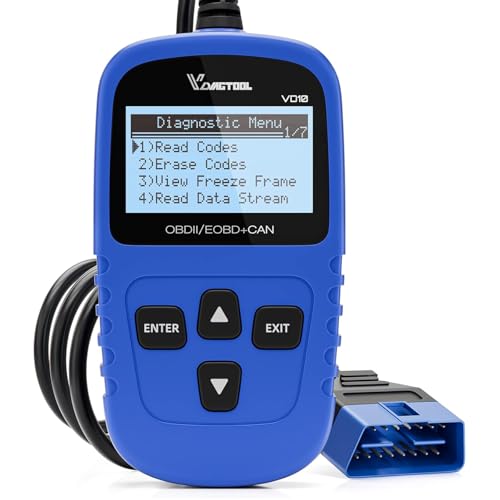
- Reads and clears engine codes
- Shows live data and freeze frame
- Supports post-2009 Asian OBDII vehicles
Best For: Drivers who want a simple plug-and-play basic code reader
Feature-Rich Value Pick

- Live data graphing for sensor monitoring
- Adds EVAP and O2 sensor tests
- Includes I/M readiness indicators
Best For: DIYers who want more diagnostic depth than a basic code reader
Compact Everyday Reader
MOTOPOWER MP69033 OBD2 Scanner

- Reads, clears, and looks up engine codes
- Shows live data and freeze frame
- Compact design with vehicle-powered operation
Best For: Owners who want a small, no-frills scanner for basic OBDII diagnostics
JDM Protocol Specialist – ANCEL JP700 JOBD Scanner for Japanese Cars
If you need car diagnostic scanners for japanese cars that can actually communicate with many Japanese imports, the ANCEL JP700 is built around JOBD support rather than only generic OBD2. It is aimed at owners of Toyota, Honda, Nissan, Mazda, and Subaru models that may throw a “Link Error” on basic readers, giving you a practical way to read and clear codes, check readiness, and review live data without heading straight to a shop.
Best For: Japanese import owners and DIYers who want JOBD compatibility for common JDM models.
Pros:
- Supports the JOBD protocol for many Japanese imports where generic scanners fail.
- Reads and clears codes, shows live data, and includes freeze frame plus DTC lookup.
- I/M readiness helps you check emissions status before a smog inspection.
- Plug-in design with a 3.5-inch screen and lifetime free software updates.
Cons:
- Focused on code reading and live data rather than full-system diagnostics.
- Updates require a Windows PC.
For JDM owners who keep running into compatibility issues, the JP700 is a smart pick because it targets the protocol gap that trips up many generic scanners. It is most valuable when you need straightforward engine diagnostics and readiness checks on Japanese imports.
Full-System Service Scanner – iCarsoft JP V2.0 for Japanese and Korean Cars
Among car diagnostic scanners for japanese cars, the iCarsoft JP V2.0 stands out if you want more than basic code reading. It is designed for Japanese and Korean vehicles and goes deep into systems like engine, transmission, ABS, SRS, air conditioning, brake, and suspension, while also adding service features such as oil reset, SAS calibration, EPB, battery management, and more.
Best For: DIY owners who want full-system diagnostics and multiple maintenance resets on supported Japanese or Korean models.
Pros:
- Full-system diagnostics across major vehicle modules, not just engine codes.
- Includes 9 service functions such as oil reset, SAS, EPB, ABS bleeding, and TPMS reset.
- CAN-FD support for newer Japanese and Korean vehicles.
- Lifetime free updates and 118 live data parameters with graphing.
Cons:
- Some special functions may not be available on every make or model.
- It cannot read imported Japanese vehicles from Japan due to protocol limitations.
This is a strong choice if you want a more advanced scan tool for maintenance and deeper troubleshooting. Just make sure your vehicle region is compatible, since the product notes specifically exclude Japanese imports from Japan.
Budget OBD2 Reader – Autel AL319 Check Engine Scanner
If you want a simple entry-level option in car diagnostic scanners for japanese cars, the Autel AL319 keeps things straightforward. It supports common post-1996 OBD II vehicles, including Japanese brands like Toyota, Nissan, and Honda, and covers the basics you need to read and clear codes, view live data, and check freeze frame or readiness status.
Best For: Drivers who want a low-cost, easy-to-use check engine code reader for basic diagnostics.
Pros:
- Plug-and-play operation with an easy interface for DIY users.
- Reads and clears codes, shows live data, freeze frame, and I/M readiness.
- Works with many post-1996 OBD II vehicles, including popular Japanese makes.
- Includes one-click I/M readiness, a color screen, and lifetime free updates.
Cons:
- It is a basic OBD2 code reader, not a full-system scan tool.
- Best suited to check-engine light tasks rather than advanced diagnostics.
The AL319 makes sense when you mainly want a dependable reader for CEL troubleshooting and emissions checks. It is not the most advanced option here, but it covers the core functions most drivers need at a low barrier to entry.
OE-Level All-Systems Tool – iCarsoft TYT V1.0 for Toyota and More
For shoppers comparing car diagnostic scanners for japanese cars, the iCarsoft TYT V1.0 is positioned as a broad, all-systems tool for many Japanese and Korean models. It offers OE-level diagnosis across supported modules, plus maintenance functions like oil reset and steering angle calibration, while also adding AutoVIN and CAN-FD support for newer vehicles.
Best For: Toyota, Nissan, Honda, and other compatible Japanese-car owners who want full-system coverage and service resets.
Pros:
- OE-level full-system diagnosis for supported Japanese and Korean vehicles.
- Includes oil reset and SAS calibration to handle common maintenance tasks.
- AutoVIN speeds up vehicle identification and reduces manual entry.
- CAN-FD support and lifetime free updates.
Cons:
- Compatibility varies by brand, model, and system; some functions may not be available.
- Specific system coverage depends on what your vehicle actually has.
TYT V1.0 is a good fit if you want a more dealer-style approach without moving into a much more expensive platform. The main tradeoff is that you should verify exact vehicle compatibility before buying, especially for the systems and resets you care about most.
TOPDON AD500 – 4-System Scanner with 6 Maintenance Resets
If you want car diagnostic scanners for japanese cars that go beyond basic code reading, the TOPDON AD500 is built for DIY diagnostics and routine maintenance. It covers engine, transmission, ABS, and SRS systems, and adds useful reset functions that can help with common service tasks on compatible vehicles.
Best For: DIY owners who want broader system coverage and maintenance resets on compatible Japanese vehicles.
Pros:
- Reads and checks four major systems: engine, transmission, ABS, and SRS.
- Includes 6 reset functions: oil, SAS, TPMS, BMS, EPB, and throttle adaptation.
- Smart AutoVIN, live data charts, and battery voltage monitoring add diagnostic convenience.
- Supports 67+ brands and 10,000+ models, with CAN FD and FCA AutoAuth support.
Cons:
- Compatibility still depends on the exact vehicle make, model, and year.
- It is more advanced than a basic code reader, so casual users may not need all the functions.
Overall, the AD500 is a strong fit if you want a step up from a simple OBD2 scanner and need broader diagnostics plus maintenance resets. Its wider protocol support and modern hardware make it a practical choice for newer vehicles and more involved DIY work.
ANCEL AD410 – Simple Check Engine Code Reader
For shoppers comparing car diagnostic scanners for japanese cars, the ANCEL AD410 is a straightforward pick for engine-light troubleshooting. It focuses on basic OBD2 functions like reading and clearing codes, live data, and smog-check readiness, which makes it a practical everyday tool for many 1996+ Asian vehicles.
Best For: Beginners who mainly need a simple check-engine scanner for compatible Japanese cars.
Pros:
- Reads and clears engine-related fault codes with 42,000+ DTC lookups.
- Shows live data, freeze frame, O2 sensor test, EVAP test, and I/M readiness.
- No app, battery, charger, or Bluetooth needed; powered by the OBD2 port.
- Works with many 2000+ EU/Asian OBD2 vehicles, including most 1996+ OBD2 cars.
Cons:
- Does not support ABS, SRS, transmission, bidirectional control, or service resets.
- Compatibility should still be checked before buying, especially on Japanese models.
The AD410 keeps things simple, which is a strength if you only need to understand and clear a check engine light. It is not a full-system scanner, but for basic OBD2 diagnosis on many Japanese vehicles, it offers good value and low hassle.
Innova 5210 – Scanner with Battery Test and Oil Reset
If you need car diagnostic scanners for japanese cars that add a little more utility than a basic code reader, the Innova 5210 is worth a look. It covers engine diagnostics, offers battery testing, and includes an oil reset feature, making it useful for routine maintenance and common troubleshooting on many Japanese vehicles.
Best For: DIY drivers who want a scanner with battery testing and maintenance-light reset support.
Pros:
- Reads and clears engine codes, with ABS code support that may vary by vehicle.
- Built-in battery tester helps check alternator health and spot electrical issues.
- Includes live data, drive cycle readiness, and oil reset functions.
- Works with most 1996+ US, Asian, and European vehicles, including Toyota, Honda, and Nissan.
Cons:
- ABS coverage may vary, so features are not identical across all vehicles.
- Requires Innova’s coverage checker to confirm exact compatibility.
The 5210 is a flexible middle-ground option if you want more than engine codes but do not need full bidirectional or advanced service functions. Its battery test and free RepairSolutions2 app support make it especially practical for owners who like guided repair help.
Quick-Use Basic Scanner – VDIAGTOOL VD10 OBD2 Scanner
If you want a simple entry-level option among car diagnostic scanners for japanese cars, the VDIAGTOOL VD10 focuses on core OBD2 tasks that most DIY owners actually need. It reads and clears engine codes, shows live data and freeze frame, and gives I/M readiness status so you can check whether the car is prepared for an inspection.
Best For: Japanese car owners who want a straightforward plug-and-play code reader for basic engine diagnostics.
Pros:
- Reads and clears codes, including generic, manufacturer-specific, pending codes, and DTC definitions from a built-in database.
- Shows live sensor data and freeze frame information for quicker troubleshooting.
- Includes I/M readiness and vehicle information features, useful before emissions testing or used-car checks.
- Works with all OBDII protocols and supports post-2009 Asian-based 12V vehicles.
Cons:
- Focused on engine/OBDII functions only; it does not claim ABS, airbag, or service-light coverage.
- Uses a basic two-line LCD display rather than a larger color screen.
- Compatibility is limited to OBDII-compliant vehicles.
This is a practical pick if you want a no-fuss scanner for routine check-engine diagnosis. It covers the essentials well without adding complexity, which makes it a sensible budget-friendly tool for everyday Japanese car maintenance.
Feature-Rich Value Pick – FOXWELL NT301 OBD2 Scanner
The FOXWELL NT301 is a strong choice if you’re comparing car diagnostic scanners for japanese cars and want more than a basic code reader. It handles check-engine codes, adds live data graphing, and includes useful OBD2 tests like I/M readiness, EVAP, and O2 sensor checks for more informed troubleshooting.
Best For: DIY owners who want a more capable handheld scanner for routine diagnostics and emission-related checks.
Pros:
- Reads and clears engine fault codes quickly with one-click operation.
- Offers live data graphing for monitoring RPM, coolant temperature, fuel trims, and oxygen sensors.
- Includes I/M readiness hotkeys, LED status indicators, EVAP testing, and O2 sensor testing.
- Supports all OBDII protocols and many 1996+ gasoline, 2000+ Asian, and 12V diesel OBD2 vehicles.
Cons:
- Functionality varies by year, make, model, and VIN, so compatibility should still be checked.
- It is centered on OBDII engine diagnostics rather than broader system scans like ABS or airbags.
- Advanced features may be more than casual users need if they only want basic code reading.
Overall, the NT301 adds useful depth without becoming complicated. If you want a handheld scanner that can help you interpret what the engine is doing in real time, this one gives you a lot of capability for the price.
Compact Everyday Reader – MOTOPOWER MP69033 OBD2 Scanner
For shoppers looking at car diagnostic scanners for japanese cars, the MOTOPOWER MP69033 keeps things focused on the essentials. It reads and erases check-engine codes, shows live data and freeze-frame details, and includes built-in DTC lookup to help you identify the likely cause of the fault.
Best For: Drivers who want a compact, easy-to-use engine code reader for routine OBDII checks.
Pros:
- Supports code reading, code clearing, freeze frame, I/M readiness, vehicle information, and live data flow.
- Includes a built-in DTC lookup library and real-time curve display for faster diagnosis.
- Works with most 1996 US-based, 2000 EU-based, and Asian OBDII/CAN vehicles.
- Offers a compact body, long cable, and power directly from the vehicle with no battery charging needed.
Cons:
- Does not support ABS, airbag, or oil service light systems.
- Live data requires the engine to be running for viewing.
- It is limited to OBDII functions rather than full-system diagnostics.
The MP69033 is a practical everyday reader if you mainly need to verify and clear engine faults. Its compact design and broad OBDII compatibility make it a straightforward tool for routine maintenance and pre-inspection checks.
Not every scanner is built for the same job. Some Car Diagnostic Scanners for Japanese Cars are ideal for quick check-engine checks, while others are better suited to full-system diagnostics and maintenance resets. Use the sections below to match the tool to your vehicle and your comfort level.
How We Picked the Best Car Diagnostic Scanners for Japanese Cars
We favored scanners with clear OBD2 compatibility, strong owner usability, and features that add real value for Japanese-car drivers. Priority went to tools with fast fault-code reading, live data where available, service functions such as oil reset or SAS calibration, and support for common Japanese makes and model years.
Quick Comparison
For basic CEL troubleshooting, a simple code reader is usually enough. For more involved diagnostics, choose a scanner with live data, enhanced system coverage, and reset capabilities. If you maintain multiple Japanese vehicles, a fuller-featured tool can pay off quickly by reducing trips to the shop.
Key Buying Factors for Car Diagnostic Scanners for Japanese Cars
Compatibility
Confirm support for your exact make, model, and year. Many scanners work with all OBD2 vehicles from 1996 onward, but brand-specific functions can vary widely across Toyota, Honda, Nissan, Subaru, Mazda, Mitsubishi, Suzuki, and Hyundai/Kia cross-market vehicles.
Feature Depth
Basic code readers handle stored and pending fault codes. Better scanners add live data, freeze frame, I/M readiness, ABS or SRS access, and service resets. Choose the level that matches whether you just clear codes or also diagnose recurring problems.
Ease of Use
Readable screens, simple menus, and fast boot-up matter more than many buyers expect. If you are a DIY owner, a straightforward interface can be more useful than advanced functions you may never use.
Service Functions
Oil reset, steering angle calibration, battery-related functions, and other maintenance tools are especially useful for owners who do their own upkeep. These features are not universal, so check carefully before buying.
Who Should Buy Which Car Diagnostic Scanners for Japanese Cars?
If you want a low-cost way to read and clear engine codes, a basic OBD2 scanner is the smart choice. If you own a Toyota, Honda, or other Japanese car and want deeper troubleshooting, step up to a model with live data and enhanced diagnostics. If you service multiple vehicles or want maintenance functions, choose one of the more advanced tools in this list.
In short, the best option depends on how often you diagnose problems and how much detail you need. For most buyers, the right scanner is the one that makes fault-finding faster, clearer, and less expensive.