If your charger never quite reaches the parking spot, the right adapter or extension setup can make everyday EV charging far easier. For drivers with awkward garage layouts, driveway parking, or shared outlets, longer cable solutions can add the flexibility you need.
This roundup of ev charging adapters for long cables focuses on fit, plug compatibility, current rating, and practical use so you can choose a safer option for home charging, backup charging, or travel.
Best 10 Ev Charging Adapters for Long Cables Picks for 2026
J1772 Reach Extender

- 40 ft reach for easier parking and outlet placement
- Supports both 120V and 240V charging
- IP66 waterproof build with storage accessories
Best For: J1772 owners needing maximum cable reach
Dryer Outlet EV Link

- 25 ft cable for added outlet-to-car reach
- ETL certified with 10AWG copper construction
- Made for EV charging only with NEMA-specific plugs
Best For: Using a compatible dryer outlet for EV charging
Tesla NACS Reach Cord

- Adds 21 ft of reach for Tesla charging
- Supports up to 50A at 240V and 12KW
- IP66 waterproof with carrying case included
Best For: Tesla owners with compatible Wall, Destination, or Mobile chargers
Extra-Long Home Charger

- 40 ft cord with NEMA 5-15 and 6-20 plugs
- Supports Level 1 and Level 2 charging
- ETL/FCC certified with 8 current settings
Best For: Drivers wanting one long cord for home charging flexibility
Long-Distance J1772 Link
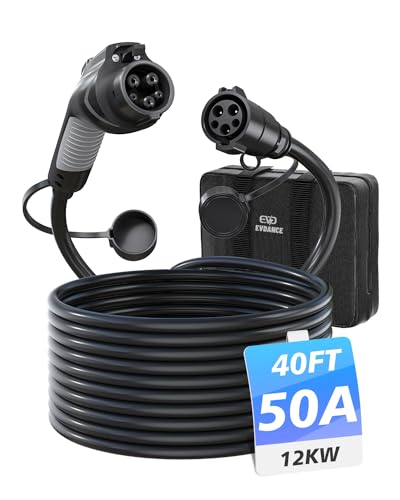
- 40-foot extension cable adds major reach for J1772 charging
- Universal SAE J1772 compatibility for standard chargers and ports
- Weather-resistant build with support for up to 40A input current
Best For: J1772 drivers needing maximum cable reach for Level 2 charging
Long-Reach Backup Charging
40ft Portable Level 1 & 2 Charger

- 40ft cord improves parking and outlet flexibility
- 4 current settings from 8A to 16A
- 110V mode caps output at 13A for safety
Best For: Travelers and homeowners needing a long portable backup charger
Heavy-Duty Outlet Converter

- 10ft cord adds more placement flexibility
- Built with heavy-duty 6AWG/3C copper wire
- ETL listed and tested before shipment
Best For: Owners with a compatible 10-50 outlet and a 14-50 EV charger
J1772 Reach Extender – 40Amp 40 ft Extension Cord
If your EV charging spot is just out of reach, this EV charging adapter for long cables is built to extend a J1772 setup without moving the car or charger. It supports 120V and 240V charging, so it can fit both Level 1 and Level 2 use cases where extra length is the main problem.
Best For: J1772 drivers who need a long, weather-resistant extension for home or travel charging.
Pros:
- 40 ft length gives you much more placement flexibility for the outlet and vehicle.
- Works with both 120V and 240V charging setups.
- IP66 waterproof construction and fire-resistant materials suit outdoor use.
- Includes a carrying bag, cleaning cloth, and cable tie for easier storage.
Cons:
- Made for SAE J1772 charging only, so it is not a universal solution.
- At 40 ft, it is bulkier than shorter extension options.
This is a practical pick if your main goal is simply getting more reach from a J1772 charger. The included accessories and rugged build make it easier to live with, but the size and single-connector focus mean it is best for users who truly need the extra distance.
Dryer Outlet EV Link – 25ft NEMA 10-30 to 14-50
This EV charging adapter for long cables is designed for drivers who want to use a 30-amp dryer outlet for EV charging. The 25-foot length gives you room to position the vehicle more comfortably, while the NEMA 10-30P to 14-50R layout makes it useful for compatible home charging setups.
Best For: EV owners who need to connect a dryer outlet to a Level 2 charging plug with extra cord length.
Pros:
- 25 ft cord provides generous reach between outlet and charger.
- ETL certified and built with 10AWG/3C copper wire.
- Double-layer waterproof jacket and flame-retardant materials support outdoor use.
- Ergonomic handles on both ends make plugging in easier.
Cons:
- For EV charging only, so it is not a general-purpose power cord.
- Rated for up to 30 amps, which is lower than the 14-50R connector’s potential.
- Works only with the specified NEMA 10-30 and 14-50 outlet types.
This adapter makes sense when the outlet type is the right match and distance is the bigger issue. Its safety certifications and weather-ready build are helpful, but the charging rate should be kept in mind so the cord stays within its intended limits.
Tesla NACS Reach Cord – 21FT 50A Extension
For Tesla owners who need more distance between the charger and the car, this EV charging adapter for long cables extends compatible NACS charging setups by 21 feet. It is built for Tesla Wall Connectors, Destination Chargers, and mobile chargers, but it is not meant for Superchargers.
Best For: Tesla drivers using compatible home or destination chargers who need an extra 21 feet of reach.
Pros:
- Supports up to 50A at 240V and up to 12KW.
- 21 ft extension helps bridge awkward parking or charger placement.
- IP66 waterproof design is suitable for indoor or outdoor use.
- Includes a carrying case for portability and storage.
Cons:
- Not compatible with Tesla Superchargers.
- Only works with Tesla charging equipment listed in the product notes.
- The charger button does not control the Tesla charge-port door.
This is a focused solution for Tesla charging setups where the cable simply needs to go farther. The strong power rating and weatherproof build are appealing, but compatibility is narrow, so it is best chosen only when your charger type matches.
Extra-Long Home Charger – 40FT Level 1/2 EV Cord
If you want an all-in-one charging option with long reach, this EV charging adapter for long cables combines a 40-foot cord with Level 1 and Level 2 compatibility. It includes both NEMA 5-15 and NEMA 6-20 plugs, so it is designed for home users who want flexible plug-and-charge charging without relying on public stations.
Best For: Home and travel charging when you need a long cord and support for both 120V and 240V outlets.
Pros:
- 40 ft cable reaches distant parking spots and garage outlets.
- Supports both Level 1 and Level 2 charging with included plug options.
- 8 current settings and delay timer add charging control.
- ETL and FCC certified with multiple safety protections.
Cons:
- Tesla needs a standard adapter, which is not included.
- 16A max output is lower than higher-powered EVSE options.
- Bulky 40 ft cable may be more than some users need.
This is the most versatile of the group for everyday home use, especially if you want both long reach and flexible outlet compatibility. The safety features and timer controls are useful, but buyers who want faster charging may prefer a higher-output unit.
Dryer-Outlet EV Reach – NEMA 10-30P to 14-50R, 20FT
If you need one of the more practical ev charging adapters for long cables, this 20-foot adapter is built to turn a NEMA 10-30 dryer outlet into a NEMA 14-50R connection for EV charging equipment. It is made for EV use only, with a 24A continuous-load limit and ETL-listed construction, so it fits well when you want extra reach without changing the outlet itself.
Best For: EV owners who want to charge from a 240V NEMA 10-30 dryer outlet and need a long, outdoor-ready conversion cord.
Pros:
- 20-foot cord gives useful reach from a dryer outlet to the vehicle or charger
- ETL certified with copper conductors and flame-retardant, UV-resistant materials
- Designed specifically for EV charging and clearly marked not for RV use
- Double-layer waterproof jacket adds durability for outdoor use
Cons:
- Must be manually limited to 24A in the vehicle or charger settings
- Does not increase power output or convert voltage
- Not compatible with RVs or non-EV use
This is a straightforward outlet-conversion cord for people who already have the right 240V source and just need safer, longer EV charging reach. The key is staying within the 24A limit and using it only with compatible EV equipment.
Long-Distance J1772 Link – J1772 Extension Cable, 40FT
Among ev charging adapters for long cables, this 40-foot J1772 extension cable is the most obvious choice when the parking spot is far from the charger. It is designed for all standard SAE J1772 chargers and charging ports, and its 50A-rated build supports up to 40A input current for flexible Level 2 charging at home, work, or public stations.
Best For: Drivers who need a long SAE J1772 extension to bridge a large gap between the charger and the car.
Pros:
- 40-foot length offers exceptional reach for awkward parking setups
- Universal SAE J1772 compatibility works with standard chargers and ports
- Built for up to 40A input current with 110V-240V compatibility
- Weather-resistant construction supports daily use in varied conditions
Cons:
- Extension design is only useful if you already have a compatible J1772 charger
- No claim of increasing charging speed beyond existing equipment limits
- Bulkier cable length may be less convenient to store and carry
This cable is a practical reach solution rather than a power upgrade. If your charging setup is already compatible, the extra length can solve distance problems without changing your existing equipment.
Dryer-Outlet Extension Pick – NEMA 14-30P to 14-50R, 20FT
If you’re comparing ev charging adapters for long cables, this 20-foot cord is a simple way to reach from a NEMA 14-30 dryer outlet to a NEMA 14-50R EV charging connection. It is intended for Level 2 EV charging only, with a 24A maximum continuous setting and ETL-listed STW 10AWG/4C copper construction for stable use on compatible 240V setups.
Best For: EV owners who need a 20-foot extension from a 4-prong NEMA 14-30 outlet to a 14-50 charging plug.
Pros:
- 20-foot length helps bridge the gap between the outlet and the vehicle
- ETL listed with 10AWG/4C copper cable and molded connectors
- Works with Tesla Mobile Connector and other EV chargers using a NEMA 14-50P plug
- Clear 24A maximum guidance for safer continuous charging
Cons:
- Does not convert voltage or raise outlet capacity to 50A service
- Not compatible with several other outlet types, including NEMA 10-30 and TT-30
- Requires charger or vehicle settings to stay at 24A max
This adapter is best treated as a reach solution for compatible dryer outlets, not a universal charging fix. If your setup matches, it offers a durable way to get the cable where you need it.
Long-Reach Backup Charging – 40ft Portable Level 1 & 2 Charger
If you need ev charging adapters for long cables in a portable charger form, this TopAutoGear unit stands out for sheer reach. The 40ft cord gives you more parking flexibility for driveways, campgrounds, Airbnbs, and awkward outlet locations, while the adjustable current settings help you match charging to the circuit you actually have.
Best For: Drivers who want a long portable backup charger for travel, overnight stays, or homes with limited outlet access.
Pros:
- 40ft extra-long cable for flexible parking and outlet placement
- 4 adjustable current levels: 8A, 10A, 13A, and 16A
- Included NEMA 5-15 adapter with automatic 13A limit on 110V use
- Plug-and-play setup with LED display for charging status
Cons:
- Not intended for standing water or submersion
- Best suited as a portable backup rather than a fixed charging solution
The main appeal here is convenience: a long cord, simple operation, and safety-minded current control. If your priority is keeping a reliable charger in the trunk for unpredictable parking situations, this is a practical option.
Dryer-Outlet EV Adapter Cord – 10-30P to 14-50R Adapter Cord
This CircleCord adapter is a straightforward choice for people looking at ev charging adapters for long cables when they already have a dryer-style outlet available. The 12-inch cord is short, but it gives you a molded, heavy-duty way to adapt a NEMA 10-30P source to a 14-50R EV charging connection without building a DIY solution.
Best For: EV owners who want a heavy-duty adapter for converting a compatible 30A dryer outlet to a 14-50 charging connection.
Pros:
- ETL listed whole product for EV charging use
- Heavy-duty molded plug with flame-retardant, UV-resistant jacket
- 10-gauge STW wiring designed for indoor/outdoor water-resistant use
- Simple plug-in solution that is safer than a DIY assembly
Cons:
- Not for RVs or dryer use
- Short 12-inch length offers little reach
- Charging current should be kept at 24A or below per the notes
For users with the right outlet type, this is a clean adapter play rather than a cable-extension product. Its value is in the rugged construction and easy, purpose-built conversion for EV charging only.
Heavy-Duty Outlet Converter – 10ft 10-50P to 14-50R Adapter
This 10ft Suplevel adapter is a practical pick if you need ev charging adapters for long cables and want a little extra slack between an outlet and your charger. It converts a NEMA 10-50P source to a NEMA 14-50R receptacle, and the heavy-duty 6AWG construction is aimed at dependable EV charging rather than general-purpose appliance use.
Best For: EV drivers with a compatible 10-50 outlet who need a sturdy adapter for Level 2 charging equipment.
Pros:
- 10ft length gives more flexibility than short adapter cords
- Heavy-duty STW 6AWG/3C copper wire construction
- ETL listed and individually tested for continuity and wiring accuracy
- Compatible with Tesla Mobile Connector and many Level 2 EV chargers, subject to compatibility
Cons:
- Not for RVs, campers, stoves, ovens, dryers, or other non-EV equipment
- Not compatible with all EV chargers
- Compatibility and grounding requirements should be checked before purchase
Overall, this is best viewed as a durable outlet-conversion accessory for the right charger setup. If your equipment matches the plug and grounding requirements, the 10ft cord can make installation and positioning easier.
How We Picked the Best Ev Charging Adapters for Long Cables
We prioritized products that solve real reach problems without adding unnecessary complexity. That means checking connector compatibility, rated amperage, cable length, and whether the product is meant for extension use or as a portable charging solution. For Ev Charging Adapters for Long Cables, safe electrical matching matters more than raw length alone.
Quick Comparison: What Matters Most
Longer options fall into two broad groups: true extension cables and adapter cords that bridge a wall outlet to an EV charging setup. Extension cables are the better fit when you already have a compatible charger and simply need more distance. Adapter cords are better when your outlet type does not match the charger plug you plan to use.
Key Buying Factors for Ev Charging Adapters for Long Cables
Connector Type and Vehicle Compatibility
Confirm whether you need J1772, NACS/Tesla, or a plug adapter for a specific outlet. A correct physical fit is essential, but it is not enough on its own.
Amperage and Circuit Match
Match the adapter or extension to the circuit and charger output. Higher-rated cords do not increase your charger’s safe output; they only support it if the rest of the setup is designed for that load.
Length Versus Voltage Drop and Handling
Longer cords improve reach, but they can be heavier and less convenient to coil or store. Choose the shortest cable that comfortably solves your parking layout.
Indoor, Outdoor, and Travel Use
Look for weather resistance, sturdy strain relief, and a design that can handle frequent plugging and unplugging. If you’ll move it often, portability and cable flexibility matter more than maximum length.
Who Should Buy Which Ev Charging Adapters for Long Cables?
Drivers with fixed home parking and a modest reach problem should start with a shorter extension or adapter setup. People needing to reach across a garage, driveway, or odd-angle parking spot may benefit more from a 40-foot option. Tesla/NACS owners should focus on Tesla-specific cable compatibility, while J1772 drivers should choose a universal EVSE-compatible extension. If you only need backup charging for trips or emergencies, a portable level 1/2 charger with a long cord can be the most versatile choice.
In short, the best choice depends on your outlet, connector type, and how far the cable must travel. Choosing carefully helps you get the convenience of longer reach without sacrificing safety or everyday usability.