When scan tools stop short, an oscilloscope helps you see what the vehicle is actually doing. From crank and cam signals to injectors, sensors, and ignition patterns, the right scope can turn guesswork into a clear diagnosis.
This roundup focuses on automotive oscilloscopes for diagnostics that offer useful channel counts, portable setups, and features worth paying for in real-world repair work.
Best 10 Automotive Oscilloscopes for Diagnostics Picks for 2026
PC 8-Channel Diagnostic Scope
8-Channel PC Automotive Diagnostic Scope

- 8 analogue channels for signal comparison
- 80+ automotive diagnostic functions
- Programmable generator for crank/cam simulation
Best For: Technicians wanting a Windows-based multi-channel diagnostic scope
Portable 3-in-1 Scope Meter

- Scope, multimeter, and signal generator in one
- 250 MSa/s sampling with 50 MHz bandwidth
- Battery-powered with waveform storage/export
Best For: Portable troubleshooting and mixed electrical testing
USB 4-Channel Diagnostic Scope
4-Channel USB Diagnostic Scope

- 4 channels and 70 MHz bandwidth
- 1 GSa/s sampling for detailed captures
- Includes multimeter and waveform generator
Best For: Windows users who want a capable USB diagnostic scope
Android Portable Diagnostic Scope
Android Handheld Automotive Scope

- 4 channels, 100 MHz bandwidth, 1 GSa/s
- Android OS with touch and button control
- Wi-Fi remote use plus 32GB internal storage
Best For: Mobile techs who want a tablet-style automotive scope
Compact 2-in-1 Handheld Scope
FNIRSI 2C53P 50MHz Oscilloscope Multimeter

- 2-channel scope with 50MHz bandwidth
- Includes 19999-count multimeter and signal generator
- Touchscreen handheld design with one-key AUTO
Best For: Portable all-in-one diagnostics and quick signal checks
PC-Based 8-Channel Diagnostic Kit
Hantek 1008C Automotive Oscilloscope
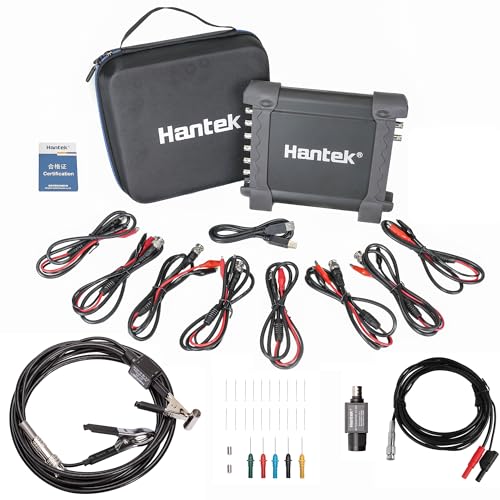
- 8-channel USB oscilloscope with Windows software
- More than 80 automotive diagnostic functions
- Signal generator can simulate crank and cam signals
Best For: Windows users needing broad automotive testing in one PC kit
Budget Pocket Scope
FNIRSI DSO152 Handheld Oscilloscope

- Portable handheld scope with one-key AUTO
- 2.5MS/s sampling and 200KHz bandwidth
- Supports Auto, Normal, and Single trigger modes
Best For: Basic automotive signal checks on the go
Multi-Channel Vehicle Scope
Hantek 1008B 8-Channel Automotive Diagnostic Scope

- 8 channels for vehicle testing
- 80+ automotive diagnostic functions
- Reports, screenshots, and long waveform recording
Best For: Technicians needing a Windows-based USB scope with wide automotive test coverage
Scope Training Guide
Automotive Lab Scope Basics Waveform Manual

- Known-good captures for key diagnostics
- Covers ignition, injectors, CKP/CMP, compression
- Practical setup and waveform interpretation guidance
Best For: DIYers and techs learning how to read automotive scope waveforms
Handheld Trio Meter Scope
3-in-1 Automotive Dual-Channel Oscilloscope

- Scope, multimeter, and signal generator in one
- Dual-channel with up to 50MHz bandwidth
- Battery-powered handheld with Type-C charging
Best For: Portable all-in-one testing for general vehicle electrical diagnostics
PC 8-Channel Diagnostic Scope – 8-Channel PC Automotive Diagnostic Scope
Hantek 1008C PC USB 8CH Automotive Diagnostic Digital Oscilloscope | DAQ/Programmable Generator
Check Price On AmazonIf you want automotive oscilloscopes for diagnostics with broad channel coverage, the Hantek 1008C is built around an 8-channel PC-based setup that combines scope testing, automotive presets, and a programmable signal generator. It is aimed at quick checks of ignition, sensors, bus signals, actuators, and starting/charging systems, while still serving as a general-purpose USB oscilloscope for basic electronics work.
Best For: PC-based users who want an 8-channel automotive diagnostic scope with built-in signal generation.
Pros:
- 8 analogue channels for broader signal comparison
- More than 80 automotive diagnostic functions included
- Programmable signal generator can simulate crankshaft and camshaft signals
- 12-bit resolution and 20 automatic measurement modes
Cons:
- Windows-only software support
- Requires a USB-connected PC rather than standalone handheld use
The 1008C makes sense when you need many channels and a practical diagnostic feature set in one USB unit. It is especially useful for technicians who want preset automotive tests and a simple way to reproduce sensor-like waveforms.
Portable 3-in-1 Scope Meter – Handheld 2-in-1 Scope Meter
For buyers comparing automotive oscilloscopes for diagnostics, the FNIRSI 2C53T stands out because it combines a 2-channel oscilloscope, a 19999-count multimeter, and a DDS signal generator in one handheld tool. It is designed for mobile testing, with a battery-powered body, auto measurement features, and storage options that make it useful for quick electrical checks and waveform review.
Best For: Technicians and hobbyists who want a portable scope-multimeter combo with signal output.
Pros:
- 3-in-1 design with oscilloscope, multimeter, and signal generator
- 250 MSa/s sampling and 50 MHz bandwidth
- Built-in battery and Type-C charging for portable use
- Supports waveform storage, export, and reference comparison
Cons:
- 2-channel design is less expansive than 4- or 8-channel tools
- 1 Kpts record depth is limited for more demanding captures
This model fits users who want a compact, all-in-one tester rather than a full bench scope. The combination of handheld convenience, measurement tools, and waveform storage makes it a practical field companion.
USB 4-Channel Diagnostic Scope – 4-Channel USB Diagnostic Scope
Hantek 6074BE Digital Oscilloscope 70MHz 1GSa/s 4CH USB Virtual Oscilloscope Diagnostic Tool
Check Price On AmazonIf you need automotive oscilloscopes for diagnostics that stay close to a laptop workflow, the Hantek 6074BE offers a 4-channel USB design with 70 MHz bandwidth and 1 GSa/s sampling. It is aimed at automotive inspection tasks like ignition, sensors, engine, startup, and charging checks, while also including multimeter and waveform generator functions.
Best For: Laptop-based automotive diagnosis with stronger sampling and four channels.
Pros:
- 4 channels with 70 MHz bandwidth
- 1 GSa/s real-time sampling rate
- Supports more than 80 diagnostic items and 20 automatic measurements
- Includes multimeter tester and waveform generator functions
Cons:
- Depends on a Windows computer for operation
- USB form factor is less convenient than a standalone handheld unit
The 6074BE is a strong fit if you want a more serious USB diagnostic scope without moving to a fully standalone tablet-style platform. Its 4-channel layout and diagnostic presets give it a useful balance of flexibility and convenience.
Android Portable Diagnostic Scope – Android Handheld Automotive Scope
Among automotive oscilloscopes for diagnostics, the Micsig SATO1004 is built for users who want a portable tablet-style scope with modern software and wireless options. It uses Android, offers 4 channels at 100 MHz bandwidth, and supports a wide range of automotive tests including ignition, sensors, actuators, charging, starter, communication, and pressure checks.
Best For: Mobile automotive diagnostics with touch control, remote access, and onboard storage.
Pros:
- 4 channels with 100 MHz bandwidth and 1 GSa/s sampling
- Android interface with physical buttons and touch controls
- Supports Wi-Fi remote operation through a smartphone app
- 32GB internal storage for waveforms, screenshots, and videos
Cons:
- Higher-end feature set may be more than casual users need
- Wireless features depend on a stable network environment
This is the most modern-feeling option in the group for users who want a self-contained automotive diagnostic platform. Its mix of portability, storage, and broad test support makes it suitable for active repair work and repeatable waveform review.
Compact 2-in-1 Handheld Scope – FNIRSI 2C53P 50MHz Oscilloscope Multimeter
If you want automotive oscilloscopes for diagnostics that can also pull double duty as a multimeter, the FNIRSI 2C53P is a practical handheld option. Its 2-channel, 50MHz scope, 250MS/s sampling, and touch display make it useful for quick signal checks, while the built-in signal generator and analysis tools add extra flexibility for troubleshooting.
Best For: Techs who want a portable all-in-one scope, multimeter, and signal generator for general automotive diagnostics.
Pros:
- 2-channel oscilloscope with 50MHz bandwidth and 250MS/s sampling
- Built-in 19999-count multimeter for added test coverage
- 4.3-inch IPS touch screen with one-key AUTO for faster setup
- DDS signal generator supports 12 waveforms and up to 10MHz output
Cons:
- Only 2 channels, so it is less suited to more complex multi-signal testing
- Battery life is about 4 hours, which may limit long sessions
- Its small handheld format may not suit users who prefer a larger PC-based display
Overall, the 2C53P stands out as a compact diagnostic tool for users who value portability and built-in versatility. The X-Y mode, FFT analysis, and automatic trigger options make it a strong fit for everyday signal inspection and learning.
PC-Based 8-Channel Diagnostic Kit – Hantek 1008C Automotive Oscilloscope
For automotive oscilloscopes for diagnostics that emphasize channel count and built-in test coverage, the Hantek1008C kit is a feature-heavy PC USB setup. It combines 8 analog channels, more than 80 automotive diagnostic functions, and a programmable signal generator, making it suited to broader vehicle system checks through Windows software.
Best For: Windows-based users who want an 8-channel automotive diagnostic oscilloscope with extensive built-in functions.
Pros:
- 8 analog channels with 12-bit resolution and 4K memory depth
- More than 80 automotive diagnostic functions included
- Programmable signal generator can simulate crankshaft and camshaft signals
- USB 2.0 connection with PC software support for Windows
Cons:
- Works only with Windows, so it is not cross-platform
- 2.4MSa/s real-time sampling is modest compared with higher-end standalone scopes
- PC-tethered setup is less portable than a handheld unit
As a diagnostic package, this Hantek system is geared toward users who want multiple channels and automotive-specific functions in one kit. It is especially practical when you need to view more than one signal at a time and use software-based analysis on a computer.
Budget Pocket Scope – FNIRSI DSO152 Handheld Oscilloscope
The FNIRSI DSO152 is a simple handheld choice for automotive oscilloscopes for diagnostics when portability and basic triggering matter most. With 2.5MS/s sampling, 200KHz bandwidth, and one-key AUTO, it is designed for quick waveform viewing and straightforward field use rather than advanced multi-channel testing.
Best For: Users who need a compact, easy-to-carry oscilloscope for basic automotive signal checks.
Pros:
- Portable handheld design with a lightweight assembled body
- 2.5MS/s sampling rate and 200KHz bandwidth for basic inspection
- Supports Auto, Normal, and Single trigger modes
- One-key AUTO and baseline calibration simplify measurements
Cons:
- 200KHz bandwidth is limited for more demanding diagnostics
- Single-channel handheld scope is less versatile than multi-channel models
- 2.8-inch display is smaller than larger tablet-style scopes
This model makes sense when you want a straightforward pocket oscilloscope for fast checks without extra setup. It is best treated as a basic field tool for simple signals, not a replacement for a more capable multi-channel automotive diagnostic scope.
Multi-Channel Vehicle Scope – Hantek 1008B 8-Channel Automotive Diagnostic Scope
For automotive oscilloscopes for diagnostics, the Hantek 1008B is built around 8-channel vehicle testing and a large set of automotive functions, making it a practical pick for technicians who want broad coverage in one USB scope. It supports ignition, sensor, bus detection, starter and charging circuit work, and it can also simulate camshaft and crankshaft signals.
Best For: Technicians who want an 8-channel USB automotive scope with built-in diagnostic functions and waveform-saving tools.
Pros:
- 8 channels for vehicle testing and multi-point capture.
- Over 80 automotive diagnostic functions, including ignition, sensor, bus detection, starter, and charging circuits.
- Can generate diagnostic reports, print results, or save screenshots with one key.
- Supports long waveform recording and camshaft/crankshaft signal simulation.
Cons:
- Windows-based operation only, so it depends on a compatible PC.
- USB DAQ-card style design may not suit buyers wanting a handheld unit.
- Details suggest it is aimed at technical users rather than casual plug-and-play use.
Overall, the Hantek 1008B stands out when you want broad automotive coverage and data-capture features in a compact PC-connected scope. Its 8-channel layout and diagnostic library make it a flexible choice for routine vehicle waveform work.
Scope Training Guide – Automotive Lab Scope Basics Waveform Manual
If you are shopping for automotive oscilloscopes for diagnostics, this field manual is aimed at helping you interpret the waveforms you capture rather than selling you hardware. It focuses on known-good captures for ignition, injectors, CKP/CMP, relative compression, CAN, LIN, and alternator ripple, with step-by-step guidance for affordable USB lab scopes.
Best For: DIYers and technicians who want a practical waveform reference for scope-based vehicle diagnostics.
Pros:
- Explains oscilloscope setup, trigger settings, and waveform analysis in practical terms.
- Covers ignition, fuel systems, sensor correlation, relative compression, bus troubleshooting, and alternator ripple.
- Includes known-good captures and numeric reference values for comparison.
- References multiple popular tool brands and low-cost USB scope options.
Cons:
- It is a guidebook, not a diagnostic tool or scope.
- Most useful if you already have or plan to buy an oscilloscope.
- Best value is for readers who want hands-on waveform interpretation, not general repair theory.
As a learning resource, this book helps you get more out of your oscilloscope by showing what good and bad captures look like in real automotive cases. It is a strong companion to a budget scope when you want more confidence in waveform-based diagnostics.
Handheld Trio Meter Scope – 3-in-1 Automotive Dual-Channel Oscilloscope
For automotive oscilloscopes for diagnostics, this handheld 3-in-1 unit combines a dual-channel oscilloscope, digital multimeter, and signal generator in one battery-powered package. It is designed for measuring pulse waves, circular waves, and noise waveforms, with AUTO recognition to help with unknown signals.
Best For: Users who want a portable all-in-one scope, meter, and signal generator for general vehicle electrical testing.
Pros:
- Combines oscilloscope, multimeter, and signal generator functions.
- Dual-channel design with up to 50MHz bandwidth in high-speed mode.
- Battery-powered handheld format with Type-C charging and data transfer.
- Includes multimeter features such as resistance, capacitance, continuity, diodes, and current measurement.
Cons:
- Maximum bandwidth and sampling depend on the selected mode.
- Storage depth is 128K, which may be limiting for some users.
- More general-purpose than a dedicated multi-channel automotive scope.
This model makes sense if portability matters and you want multiple test tools in one device. It is especially appealing for basic to mid-level vehicle electrical diagnosis where a handheld form factor is more important than deep channel count.
How We Picked These Automotive Oscilloscopes for Diagnostics
We prioritized tools that make vehicle testing practical: enough bandwidth for common automotive signals, stable sampling, helpful accessory support, and form factors suited to shop or mobile use. We also favored models that balance channel count, ease of setup, and value so they work for both seasoned technicians and advanced DIY users.
Quick Comparison: What Matters Most
For most buyers, the biggest decision is not just price—it is how you plan to test. USB-based units can offer more channels and better value if you already have a laptop. Handheld scopes are easier to carry and faster to deploy in the bay. Combo tools with a multimeter or signal generator can save space, but they may trade off in display size or workflow.
Key Buying Factors for Automotive Oscilloscopes for Diagnostics
Channel Count
Two channels is often enough for basic sensor or ignition comparisons. Four channels are better for correlated tests such as CKP/CMP relationships, injector timing, or power-and-ground checks. Eight-channel systems are useful in advanced diagnostic work and for capturing multiple signals at once.
Bandwidth and Sampling
For automotive work, you usually do not need lab-grade specs, but you do need enough bandwidth and sample rate to capture clean waveforms without missing details. Higher bandwidth helps with faster edges and ignition-related testing, while a solid sample rate improves waveform accuracy.
Portability and Workflow
Ask whether you want a dedicated handheld scope or a PC-connected unit. Handheld models are convenient for road calls and quick checks. PC USB scopes can be more flexible for analysis, recording, and multi-channel work, especially if you are comfortable using software on a laptop.
Accessories and Test Leads
The scope is only part of the package. Probes, attenuators, current clamps, breakout leads, and compatible adapters can make a major difference in how useful the tool is on a vehicle. A strong accessory ecosystem often matters more than a small spec difference on paper.
Who Should Buy Which Automotive Oscilloscopes for Diagnostics?
If you are a DIYer or beginner, a simpler dual-channel handheld scope or an entry-level combo tool is usually the easiest way to learn waveform testing. If you work on modern vehicles regularly, a four-channel scope gives you better diagnostic flexibility. If you want the most versatility for deeper electrical troubleshooting, the higher-channel PC-based Automotive Oscilloscopes for Diagnostics are typically the best fit.
For shops, the best choice is usually the one that matches your workflow: quick handheld access for fast checks, or a laptop-based system when you need longer captures and more channels. Choose the scope that helps you test faster, interpret signals clearly, and confirm the fault with confidence.