The best cordless dust extractors make it easier to control fine dust without dragging a bulky vacuum across the jobsite. They are especially useful for cordless tools, punch-list work, installations, and spaces where mobility matters.
This roundup compares 10 leading compact, mobile, and jobsite-ready extractors, including true battery-powered models and high-capacity HEPA systems suited to demanding shop and construction work.
Best 10 Cordless Dust Extractors Picks for 2026
Best Compact Wet/Dry Pick
Makita XCV11Z 18V LXT Extractor

- HEPA filtration captures 99.97% of particles 3 microns and larger
- Up to 60 minutes with a compatible 5.0Ah battery
- Compact 2-gallon wet/dry design
Best For: Portable home, garage, and vehicle cleanup
Best High-Capacity Workshop Pick
Festool CT 26 EI HEPA Extractor

- 26-liter canister capacity
- Five adjustable suction levels
- Bluetooth and automatic tool-trigger operation
Best For: Organized workshops using corded power tools
Best Ultra-Portable Jobsite Pick
DEWALT DWH161B 20V Dust Extractor

- Weighs only 3.7 pounds
- HEPA filter included
- Designed for SDS Plus drilling and chipping
Best For: Mobile jobsite dust control
Best Cordless Power Pick
Festool CTC MIDI I HEPA Extractor
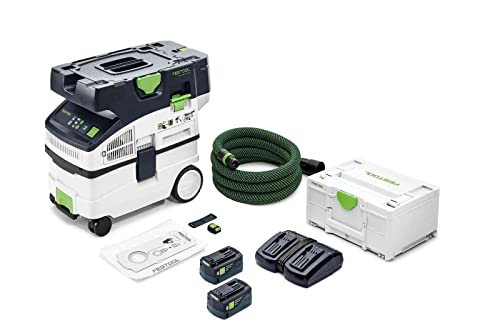
- 36V turbine uses two 18V battery packs
- Three adjustable extraction levels
- Designed for cordless sawing, sanding, and drilling
Best For: Festool cordless-tool workflows
Automatic-Cleaning Power

- Automatic filter cleaning every 15 seconds
- HEPA filtration and up to 150 CFM
- Power-tool activation with adjustable suction
Best For: Grinder work and demanding workshop dust extraction
Smart Systainer Integration

- Five suction levels for task-specific control
- Bluetooth and tool-triggered operation
- T-LOC supports Systainer attachment
Best For: Festool workshops and construction-site organization
Long-Reach Wet/Dry Cleanup
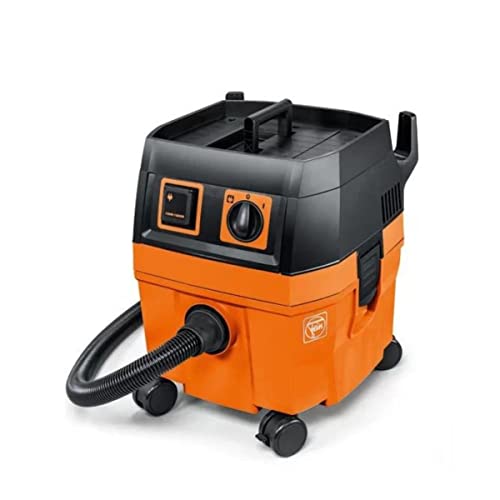
- 151 CFM wet/dry extraction performance
- 19.7-foot cord and 13-foot hose
- Auto-start outlet for power-tool use
Best For: Indoor workshops and extended-reach cleanup
Automatic-Cleaning Workhorse
DEWALT DWV010 HEPA Dust Extractor
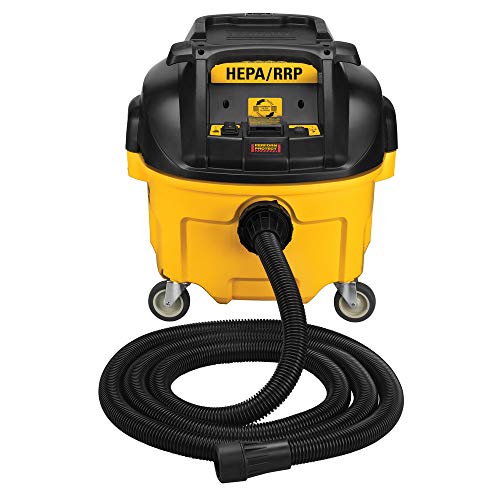
- Automatic filter cleaning every 30 seconds
- 15-amp motor with 150 CFM airflow
- Tool actuation and 8-gallon capacity
Best For: Extended workshop and renovation cleanup
Remote-Controlled Value Pick
8-Gallon Dust Extractor Shop Vacuum

- Remote control for garage and woodworking tasks
- Dry, wet, and blowing functions
- 1000W motor with HEPA filtration
Best For: Flexible garage and workshop cleanup
High-Capacity HEPA Performer

- 11-gallon wet/dry capacity
- 148 CFM with 92 inches of water lift
- Automatic cleaning and tool-activated outlet
Best For: Large-scale concrete and garage cleanup
Best Compact Wet/Dry Pick – Makita XCV11Z 18V LXT Extractor
The Makita XCV11Z is a compact option among cordless dust extractors, combining wet/dry capability with a HEPA filter and a brushless 18V motor. It delivers 57 CFM of airflow, offers up to 60 minutes of runtime with a 5.0Ah battery, and weighs about 10.1 pounds with the battery installed. Note that this is a tool-only product.
Best For: Home, garage, vehicle, and floor-cleaning tasks where portability and wet/dry versatility matter.
Pros:
- HEPA filtration captures 99.97% of particles 3 microns and larger.
- Compact design with a 2-gallon capacity and included hose and nozzles.
- Brushless motor provides 57 CFM and up to 60 minutes of runtime with a compatible 5.0Ah battery.
Cons:
- Battery and charger are not included.
- Its 2-gallon capacity is smaller than that of larger workshop extractors.
Choose this Makita when you want a lightweight, battery-powered extractor for varied indoor cleanup. Its limited capacity and tool-only configuration are the main points to consider before buying.
Best High-Capacity Workshop Pick – Festool CT 26 EI HEPA Extractor
The Festool CLEANTEC CT 26 EI HEPA is a larger canister-style choice among cordless dust extractors, although its listed power source is AC/DC rather than battery-only. It provides a 26-liter capacity, five suction levels, HEPA filtration, and automatic tool-triggered operation designed for corded power tools.
Best For: Workshop users who need substantial capacity, adjustable extraction, and integrated tool-start convenience.
Pros:
- Large 26-liter capacity reduces the need for frequent emptying.
- Five suction levels allow adjustment for different tasks.
- Bluetooth connectivity and automatic tool-triggered operation add convenience.
Cons:
- It is a relatively heavy unit at about 17.19 kg.
- Its automatic tool-trigger feature is designed for corded power tools.
- The supplied notes do not identify it as a battery-powered extractor.
This Festool is best viewed as a feature-rich, high-capacity workshop extractor rather than a fully cordless unit. Its controls, HEPA filter, and Systainer-compatible T-LOC design make it practical for organized shop setups.
Best Ultra-Portable Jobsite Pick – DEWALT DWH161B 20V Dust Extractor
The DEWALT DWH161B is one of the most portable cordless dust extractors for drilling and chipping applications. This 3.7-pound unit includes a HEPA filter, shoulder strap, and belt hook, while its brushless 20V MAX motor and Wireless Tool Control support mobile dust collection around SDS Plus rotary hammers.
Best For: Jobsite drilling and chipping where a lightweight, wearable extractor is more useful than a large canister.
Pros:
- Compact 3.7-pound design supports high mobility.
- Included HEPA filter and OSHA Table 1 compliance support dust-control needs.
- Shoulder strap, belt hook, and multiple connection points improve carrying flexibility.
Cons:
- It is optimized for SDS Plus rotary hammers rather than general floor cleaning.
- The battery is not included.
- The supplied specifications list only three minutes of runtime.
Pick the DWH161B when portability and tool-mounted dust control are the priorities. Its specialized design makes it less suitable as a general-purpose shop vacuum or high-capacity extractor.
Best Cordless Power Pick – Festool CTC MIDI I HEPA Extractor
Festool Cordless Mobile Dust Extractor CLEANTEC CTC MIDI I HEPA-Plus 577069+577079
Check Price On AmazonThe Festool CLEANTEC CTC MIDI I is a dedicated cordless dust extractor built around a 36V turbine and two 18V battery packs. It is designed for cordless sawing, sanding, and drilling, offers three extraction-power levels, and includes a remote control, HEPA filter, filter bag, and suction hose.
Best For: Festool cordless-tool users who want cord-free extraction with power comparable to a corded extractor.
Pros:
- Two 18V batteries provide a combined 36V power system.
- Three extraction levels make it easier to match suction to the task.
- Includes Bluetooth connectivity, remote control, HEPA filter, and hose.
Cons:
- It requires two compatible 18V battery packs.
- The supplied runtime is listed as 16 minutes.
- Its listed weight varies by battery selection, with the specifications also showing 43 pounds.
This Festool offers a strong cordless setup for users already invested in compatible batteries and tools. It is more capable than a small handheld extractor, but battery requirements, runtime, and weight deserve close attention.
Automatic-Cleaning Power – Bosch VAC090AH Dust Extractor
The Bosch VAC090AH is a strong choice among cordless dust extractors for users who prioritize consistent suction and jobsite dust control. Its automatic filter cleaning cycles every 15 seconds, while the HEPA filter captures 99.97% of particles measuring 0.3 microns or larger. Note that this model uses corded electric power.
Best For: Grinder and power-tool dust extraction, workshop cleanup, and users seeking OSHA-oriented dust-control features.
Pros:
- Automatic filter cleaning helps maintain suction.
- HEPA filtration captures 99.97% of particles at 0.3 microns or larger.
- Power-tool activation and adjustable Power Broker suction control.
- Delivers up to 150 CFM and 97 inches of static water lift.
Cons:
- It is corded rather than cordless.
- The 9-gallon canister may be bulky for compact work areas.
Choose this Bosch when automatic maintenance, high airflow, and integrated power-tool control matter more than cordless portability.
Smart Systainer Integration – Festool CT 36 EI HEPA
The Festool CT 36 EI HEPA brings smart controls and workshop-friendly storage to the dust-extractor category. Although it is corded, its Bluetooth connectivity can pair with compatible battery packs or an optional remote, and five suction levels make it easier to match extraction to the task.
Best For: Construction sites and workshops using Festool Systainers, Bluetooth controls, and corded power tools.
Pros:
- Five adjustable suction levels provide flexible control.
- Bluetooth supports automatic starting with compatible battery packs or an optional remote.
- Tool-triggered operation starts the extractor with a corded power tool.
- T-LOC allows Systainers to attach conveniently.
Cons:
- It requires corded electric power.
- At 39.3 pounds, it is heavier than the other listed extractors.
- Bluetooth battery-pack operation depends on compatible equipment.
This Festool is a practical fit for users already invested in the Systainer system and who value smart triggering, adjustable suction, and a larger 9.5-gallon capacity.
Long-Reach Wet/Dry Cleanup – Fein Turbo I Dust Extractor
The Fein Turbo I is a compact wet/dry extractor for users who need extended reach and tool-activated cleanup. Its 19.7-foot power cord and 13-foot hose help cover more ground, while the 1100W turbine produces up to 151 CFM. Like the other models here, it is corded rather than a cordless dust extractor.
Best For: Workshops, indoor cleanup, and power-tool users who need wet/dry capability with long cable and hose reach.
Pros:
- 1100W turbine delivers up to 151 CFM and 98 inches of water lift.
- Long 19.7-foot cord and 13-foot hose reduce outlet changes.
- Auto-start outlet synchronizes extraction with power tools.
- Large swivel wheels support movement in tight spaces.
Cons:
- It is corded and does not provide battery operation.
- The 5.8-gallon capacity is smaller than the Bosch and Festool models.
- The supplied specifications list 66 dB of operating noise.
Consider the Fein Turbo I when reach, wet/dry versatility, and automatic tool activation are more important than maximum canister capacity or cordless operation.
Automatic-Cleaning Workhorse – DEWALT DWV010 HEPA Dust Extractor
The DEWALT DWV010 is a corded option for buyers comparing cordless dust extractors but needing sustained jobsite performance. Its 15-amp motor delivers 150 CFM, while automatic filter cleaning pulses every 30 seconds to help maintain operation without frequent manual filter servicing.
Best For: Workshop and renovation users who want HEPA filtration, tool-actuated operation, and an 8-gallon tank.
Pros:
- Automatic filter cleaning supports continuous operation.
- 15-amp motor provides 150 CFM of airflow.
- Power-tool actuation controls vacuum startup and shutdown.
- Heavy-duty wheels, casters, and a 15-foot antistatic hose suit jobsite use.
Cons:
- It is corded rather than cordless.
- At 80 dB, it may be relatively loud during operation.
- EPA RRP compliance requires the specified DWV9330 filters.
This DEWALT is a practical pick when automatic cleaning and tool integration matter more than battery portability. Its 8-gallon capacity and durable rolling design make it well suited to extended indoor renovation and workshop cleanup.
Remote-Controlled Value Pick – 8-Gallon Dust Extractor Shop Vacuum
This 8-gallon shop vacuum is a corded alternative for shoppers researching cordless dust extractors, with remote operation for garage and woodworking tasks. Its 1000W motor, HEPA and paper-bag filtration, and dry, wet, and blowing modes give it broad cleanup versatility.
Best For: Garage users and woodworkers who value remote control, three-in-one cleaning, and a generous tank.
Pros:
- Remote control allows operation from a distance.
- Supports dry pickup, wet pickup, and blowing.
- HEPA and paper-bag filtration help protect the motor and support suction efficiency.
- Includes multiple brushes, adapters, bags, and eight wheels.
Cons:
- It requires a 120-volt corded connection.
- The included hose is 11.5 feet, shorter than some larger jobsite models.
- The notes identify garage use rather than specialized regulatory compliance.
This model emphasizes convenience and flexibility rather than battery mobility. The remote and accessory kit are useful for woodworking cleanup, while the 8-gallon tank reduces how often you need to stop and empty it.
High-Capacity HEPA Performer – Makita VC4210L Dust Extractor
The Makita VC4210L is a high-capacity corded choice for buyers comparing cordless dust extractors and needing wet/dry capability. Its 12-amp motor produces 148 CFM and 92 inches of water lift, while automatic filter cleaning and a two-stage filtration system support longer working sessions.
Best For: Concrete and garage cleanup where large capacity, HEPA filtration, and tool-triggered operation are priorities.
Pros:
- Large 11-gallon capacity reduces emptying interruptions.
- HEPA filter captures 99.97% of particulates 0.3 microns and larger.
- Automatic filter cleaning helps extend filter life.
- Tool-activated outlet includes a 10-second delay to clear remaining debris.
Cons:
- It is corded and not battery powered.
- Its 35.3-pound weight is heavier than the DEWALT model listed here.
- The supplied notes list no manufacturer warranty.
For demanding cleanup, the VC4210L stands out for its 11-gallon tank, wet/dry design, and filtration performance. It is a strong fit when capacity and automatic cleaning outweigh the convenience of a cordless platform.
How We Picked the Best Cordless Dust Extractors
We focused on the features that matter most during real woodworking, remodeling, and construction tasks: power source, portability, dust capacity, filtration, automatic filter cleaning, tool connectivity, hose compatibility, and wet/dry versatility. The list includes compact battery-powered units as well as mobile extractors that may be a better fit when maximum capacity and continuous suction matter more than completely cordless operation.
HEPA filtration and dependable filter maintenance received particular attention because fine dust can quickly reduce airflow and create cleanup problems. We also considered whether each extractor is best suited to a handheld tool, a stationary shop setup, or a full jobsite system.
Quick Comparison
| Best For | What to Prioritize | Recommended Type |
|---|---|---|
| Maximum portability | Low weight and battery operation | Compact 18V or 20V extractor |
| Long cutting or grinding sessions | Large container and automatic cleaning | High-capacity mobile extractor |
| Fine hazardous dust | Certified HEPA filtration and sealed airflow | Professional HEPA dust extractor |
| Wet and dry cleanup | Liquid-rated tank and easy drainage | Wet/dry extractor |
Key Buying Factors for Cordless Dust Extractors
Battery Platform and Runtime
A cordless extractor is most convenient when it uses batteries you already own. Check whether the tool is sold bare or with batteries, and estimate runtime using your expected load. High-demand sanding, routing, and grinding can drain packs quickly, so multiple batteries or a corded backup may be necessary.
Filtration and Dust-Class Protection
Look for a true HEPA filter when capturing very fine particles is important. A sealed system, effective prefilter, and automatic or manual filter-cleaning mechanism help maintain suction. For concrete, drywall, or other hazardous dust, follow the tool and filter manufacturer’s safety guidance rather than relying on capacity alone.
Capacity, Airflow, and Hose Compatibility
Small extractors are easier to carry but require more frequent emptying. Larger tanks support longer sessions and fewer interruptions. Match the hose diameter, adapter, and airflow to your power tool; a poor connection can undermine even a powerful vacuum.
Controls and Jobsite Convenience
Useful features include tool-triggered startup, remote controls, variable suction, hose storage, battery or cord management, sturdy wheels, and compact stacking. Automatic filter cleaning is especially valuable when working with heavy dust loads.
Who Should Buy Which Cordless Dust Extractors?
Choose a compact Makita or DEWALT battery-powered model if you need maximum mobility for drilling, trim work, installations, or quick cleanup. Choose Festool’s cordless mobile system when you want a refined, integrated solution for compatible cordless tools and professional finishing work.
For workshops and longer production tasks, the Bosch, Fein, Festool CT, DEWALT DWV010, or Makita VC4210L models are better suited to larger debris loads, sustained suction, and frequent filter maintenance. A remote-controlled 8-gallon unit can be useful when convenient operation matters, but verify its filtration, battery setup, and parts support before buying.
In short, prioritize portability for short jobs, capacity and automatic cleaning for continuous work, and certified filtration whenever fine dust exposure is a central concern.