Fine dust can quickly coat a workshop, reduce visibility, and create extra cleanup after sanding, routing, or cutting. The right extractor helps capture debris at the source while keeping your workspace more manageable.
This roundup compares 10 dust extractors under $300, including portable shop vacuums, cyclone separators, HEPA-filtered models, and tool-activated systems. Use the guide below to match capacity, airflow, filtration, and convenience features to your projects.
Best 10 Dust Extractors Under 300 Picks for 2026
High-Capacity Pick
DYNAVEX 12-Gallon Dust Extractor

- 1.5 HP motor with 142 CFM airflow
- 0.5-micron HEPA filtration
- 12-gallon tank and included adapters
Best For: Woodworking shops needing capacity and fine-dust filtration
Filter-Saving Pick
Dustopper PRO Cyclone Separator

- Separates dust before it reaches the vacuum filter
- Low-profile design fits a 5-gallon bucket
- Includes two high-flow sweep elbows
Best For: Shop-vac owners seeking less filter maintenance
Most Portable
DEWALT 20V MAX Universal Extractor

- Lightweight 3.7-pound cordless design
- HEPA filter included
- Strap points and belt hook aid positioning
Best For: Mobile SDS-plus drilling and chipping work
Budget Rolling Collector
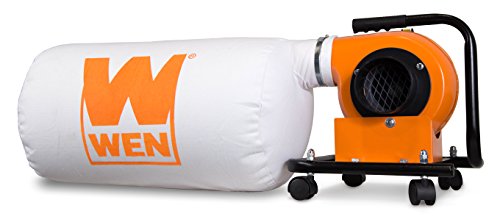
- Up to 660 CFM airflow
- 12-gallon 5-micron collection bag
- Lockable casters and optional wall mount
Best For: Home workshops needing affordable rolling collection
Versatile Workshop Pick
ECOMAX 8-Gallon HEPA Dust Extractor

- Dual-mode vacuum and dust-extractor operation
- Power-tool activation with semi-automatic filter cleaning
- 10-foot anti-static hose and extensive accessory kit
Best For: DIY workshops needing tool-connected and general cleanup
High-Airflow Workhorse
8-Gallon 150 CFM Dust Extractor
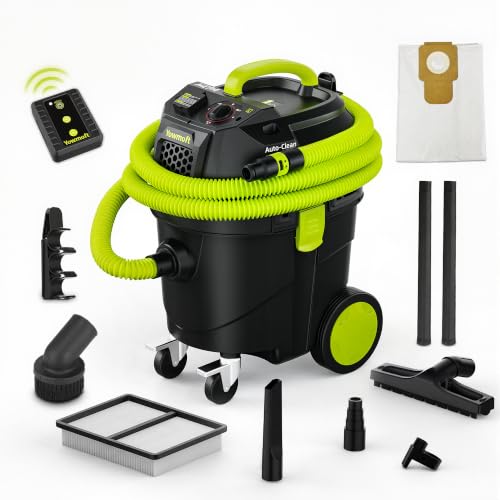
- 150 CFM airflow with up to 96 inches of water lift
- Automatic HEPA cleaning every 20 seconds
- Remote control and tool activation up to 5 amps
Best For: Heavy-duty woodworking and garage dust collection
Quiet Mobility Pick
Rockler 9-Gallon HEPA Dust Extractor

- HEPA filtration with pulse filter cleaning
- Automatic startup for tools up to 7 amps
- 65 dB or less with large mobility casters
Best For: Mobile, quieter workshop dust collection
Best Remote-Controlled Pick
8-Gallon Wet/Dry Dust Extractor

- Remote control for convenient operation
- HEPA and paper-bag filtration
- Wet, dry, and blower functions
Best For: Garages and woodworking projects needing flexible cleanup
Best Heavy-Duty Capacity

- 150 CFM airflow for demanding cleanup
- Automatic HEPA filter cleaning
- Tool-activated auto-start
Best For: Workshops, construction, and industrial applications
Best Jobsite Value
8-Gallon Auto-Start Dust Extractor

- 140 CFM and 20 kPa suction
- Automatic HEPA cleaning
- Long cord and hose with 2-year warranty
Best For: Jobsites, workshops, and tool-based dust collection
High-Capacity Pick – DYNAVEX 12-Gallon Dust Extractor
If you need dust extractors under 300 for a garage or woodworking shop, the DYNAVEX combines a 1.5 HP motor with 142 CFM airflow and a 12-gallon steel tank. Its HEPA filtration and included hose adapters make it a practical option for sawing, sanding, and routing.
Best For: Woodworkers who want a portable, high-capacity extractor with linked tool startup.
Pros:
- 0.5-micron HEPA filter helps capture fine particles.
- 12-gallon tank reduces how often you need to empty it.
- Includes a 4-inch hose, clamps, replacement paper filters, and multiple adapters.
- AUTO mode starts the extractor when a connected tool is switched on.
Cons:
- The linked tool must not exceed 550 watts.
- Continuous linked operation is limited to one hour.
- Wheels require optional installation.
The DYNAVEX is a strong fit when capacity and fine-dust filtration matter more than minimum size. Confirm that your tools meet the linked-switch limits before relying on automatic startup.
Filter-Saving Pick – Dustopper PRO Cyclone Separator
For shoppers comparing dust extractors under 300, the Dustopper PRO offers a different approach: it separates dust before it reaches your shop vacuum. The low-profile design connects to a standard 5-gallon bucket and is intended to preserve airflow while reducing filter maintenance.
Best For: Workshop users who already own a shop vacuum and want to reduce filter loading and replacement costs.
Pros:
- Claims 99.9% separation efficiency for dust and debris.
- Helps keep the vacuum filter cleaner and maintain airflow.
- Includes two high-flow sweep elbows for flexible setup.
- Compact low-profile design fits onto a standard 5-gallon bucket.
Cons:
- It is a separator kit, not a powered vacuum or extractor.
- A standard 5-gallon bucket and shop vacuum are needed to create the system.
- Its compact design may provide less collection capacity than larger tanks.
The Dustopper PRO makes sense as an add-on for an existing vacuum setup rather than as a standalone dust extractor. It is especially appealing if frequent filter cleaning is your main workshop nuisance.
Most Portable – DEWALT 20V MAX Universal Extractor
Among dust extractors under 300, the DEWALT DWH161B stands out for compact, jobsite-focused portability. This 3.7-pound cordless unit includes a HEPA filter, strap connection points, and a belt hook, making it well suited to drilling and chipping applications.
Best For: Users working with SDS-plus rotary hammers who need a lightweight extractor that can attach to their work setup.
Pros:
- Compact 3.7-pound design is easy to carry.
- HEPA filter is included.
- Multiple strap points and a belt hook support ergonomic positioning.
- Wireless Tool Control can link the extractor and tool for remote activation.
Cons:
- This is the tool-only version, so a compatible 20V MAX battery is not included in the supplied details.
- It is optimized for SDS-plus rotary hammer drilling and chipping rather than general shop collection.
- Wireless Tool Control requires a separately sold key fob.
The DEWALT is a convenient choice when mobility matters more than tank capacity. Its compact form and attachment options are particularly useful for overhead or mobile drilling work.
Budget Rolling Collector – WEN 12-Gallon Dust Collector
The WEN DC3401 is a practical contender among dust extractors under 300 for stationary or mobile woodworking. Its 5.7-amp motor moves up to 660 CFM, while the rolling base, 4-inch dust port, and 12-gallon collection bag support common workshop tools.
Best For: Home workshops wanting a rolling collector with a generous bag and flexible storage options.
Pros:
- Moves up to 660 CFM of air.
- 12-gallon zippered collection bag limits frequent emptying.
- Lockable swivel casters make it easier to position securely.
- Can be used with an optional wall mount and includes a two-year warranty.
Cons:
- The included collection bag is rated at 5 microns rather than HEPA filtration.
- It uses a brushed motor.
- The 4-inch dust port may require suitable adapters for some tools.
The WEN offers useful airflow and workshop flexibility at a straightforward price point. Choose it for general woodworking dust collection, but consider a finer filtration solution if submicron dust control is a priority.
Versatile Workshop Pick – ECOMAX 8-Gallon HEPA Dust Extractor
If you need dust extractors under 300 for both workshop cleanup and power-tool use, the ECOMAX Shop Vac combines an 8-gallon tank with HEPA filtration and dual-mode operation. Its power-tool activation and semi-automatic filter cleaning make it practical for woodworking, sanding, and general garage cleanup.
Best For: DIYers and woodworkers who want one corded vacuum for tool-connected dust collection, dry debris, and liquid cleanup.
Pros:
- Power-tool activation starts the vacuum when a connected tool turns on.
- HEPA filtration, a dust-full indicator, and semi-automatic filter cleaning support consistent operation.
- Includes a 10-foot anti-static hose, extension wands, nozzles, filter bags, and other accessories.
- Its 8-gallon polymer tank includes a drain port for easier emptying.
Cons:
- At 75 dB, it may be noticeable in quieter workspaces.
- The 15-amp corded design requires a suitable nearby power outlet.
The ECOMAX is a flexible choice when tool activation and a broad accessory kit matter more than ultra-quiet operation. Its anti-static hose and HEPA filter add useful features for routine workshop dust control.
High-Airflow Workhorse – 8-Gallon 150 CFM Dust Extractor
Among dust extractors under 300, this 8-gallon model stands out for its stated 150 CFM airflow and automatic HEPA filter cleaning. It is designed for demanding woodworking and garage tasks, with tool activation, remote control, and wet/dry capability to reduce interruptions during a project.
Best For: Woodworkers handling heavy dust and debris who value high airflow, automatic filter cleaning, and remote operation.
Pros:
- 1200-watt motor delivers 150 CFM airflow and up to 96 inches of water lift.
- Automatic HEPA filter cleaning runs every 20 seconds to help limit dust buildup.
- Tool activation synchronizes the extractor with connected tools up to 5 amps.
- Remote control, wet/dry operation, and overload-prevention features add convenience.
Cons:
- The tool-activation outlet is limited to a maximum 5-amp load.
- Its 35.2-pound weight and taller canister form may be less convenient for frequent repositioning.
This extractor is a strong fit when suction performance and automated maintenance are priorities. The included remote control is especially useful in cluttered or hard-to-reach work areas, while the 8-gallon capacity suits extended jobs.
Quiet Mobility Pick – Rockler 9-Gallon HEPA Dust Extractor
For shoppers comparing dust extractors under 300, the Rockler 9-gallon system offers HEPA filtration, pulse filter cleaning, and automatic startup through a 110V tool socket. Its low stated noise level, large casters, and onboard storage make it well suited to mobile workshop use.
Best For: Woodworkers who want a quieter, portable dust extractor for compatible power tools and hard-floor cleanup.
Pros:
- Washable HEPA filtration captures particles down to 0.3 microns, according to the supplied specifications.
- Pulse filter cleaning and a 5-second shutoff delay help manage residual dust.
- Runs at 65 dB or less and includes oversized 3-inch casters for mobility.
- Includes a 12-foot hose, disposable filter bag, accessories, and onboard storage.
Cons:
- Automatic tool activation supports compatible tools up to 7 amps.
- Its 85 CFM suction rating is lower than the 150 CFM rating listed for the competing 8-gallon model.
- The system is specified for indoor hard-floor use rather than a broad range of surfaces.
The Rockler favors convenient, relatively quiet operation over maximum listed airflow. Its 9-gallon capacity, casters, long cord, and pulse cleaning make it a practical option for moving between stations in a small workshop.
Best Remote-Controlled Pick – 8-Gallon Wet/Dry Dust Extractor
If convenient operation matters, this 8-gallon model is a practical option among dust extractors under 300. Its remote control lets you operate the unit from a distance, while the 1000W motor, HEPA filter, and wet/dry/blower functionality cover common garage and woodworking cleanup tasks.
Best For: Garage users and woodworkers who want remote operation and versatile cleanup.
Pros:
- Remote control supports convenient operation during projects.
- HEPA and paper-bag filtration help protect the motor and support suction efficiency.
- Wet, dry, and blowing modes handle dust, wood chips, spills, and leaves.
- Large 8-gallon tank reduces how often it needs emptying.
Cons:
- The supplied specifications do not state an airflow or suction rating.
- Its 11.5-foot hose may be limiting for larger work areas.
This is a flexible, feature-rich choice for routine workshop and garage cleanup, especially if remote operation is a priority. The included accessory kit and wheeled design add convenience, though users needing published high-performance airflow figures may prefer a more specification-heavy model.
Best Heavy-Duty Capacity – 10-Gallon HEPA Dust Extractor
For demanding workshop or construction cleanup, this 10-gallon unit stands out among dust extractors under 300 with its 150 CFM airflow, 10-amp motor, and automatic HEPA filter cleaning. Tool auto-start and a dust-full indicator are designed to make extended use more efficient.
Best For: Woodworking, construction, industrial, and workshop applications requiring higher capacity and automated controls.
Pros:
- Automatic HEPA cleaning runs every 20 seconds to help maintain suction.
- 150 CFM airflow and 96 in. H2O maximum static lift support heavy-duty use.
- Tool-activated auto-start synchronizes extraction with a connected power tool.
- Dust indicator light signals when the container needs emptying.
Cons:
- At 35.2 pounds, it is heavier than the other listed models.
- The remote control is sold separately.
- The supplied details list a 110V power source, which may require compatibility checking.
This model is the strongest fit when capacity, automated filter maintenance, and tool integration matter more than portability. Its larger tank and performance-oriented specifications suit demanding work, while the separate remote accessory adds to the overall setup cost.
Best Jobsite Value – 8-Gallon Auto-Start Dust Extractor
This Dapper Supply extractor combines jobsite-focused features in a compact 8-gallon design, making it a compelling option among dust extractors under 300. It provides 140 CFM airflow, 20 kPa suction, automatic HEPA cleaning, and tool-activated starting for source capture with compatible equipment.
Best For: DIY users and professionals collecting dust from grinders, sanders, saws, drywall work, and general cleanup.
Pros:
- Automatic HEPA filter cleaning operates every 25 seconds during use.
- 1200W motor delivers up to 140 CFM airflow and 20 kPa vacuum.
- Tool auto-start supports connected tools up to 5.5A.
- Includes a 13.1-foot hose, 19.7-foot power cord, and a 2-year warranty.
Cons:
- The tool-activation outlet is limited to tools up to 5.5A.
- Its 8-gallon capacity is smaller than the 10-gallon alternative.
- The supplied specifications do not state a remote-control function.
With strong airflow, automatic filter maintenance, long reach, and a stated 2-year parts and labor warranty, this is a well-rounded choice for jobsite dust collection. Check your power-tool amperage before relying on the auto-start outlet.
How We Picked the Best Dust Extractors Under 300
We selected models based on the features that matter most for affordable workshop dust collection: suction and airflow claims, filtration, container or bag capacity, hose and tool compatibility, portability, controls, and value. The list includes compact cordless extraction, mobile dust collectors, wet/dry vacuums, cyclone separators, and tool-activated systems so different types of users can find a practical fit.
Specifications can vary by configuration, filter condition, hose size, and testing method. Treat advertised horsepower, CFM, and suction figures as useful comparison points rather than direct one-to-one performance guarantees.
Quick Comparison
| Best For | Look For | Why It Matters |
|---|---|---|
| Stationary woodworking tools | Larger capacity and strong airflow | Reduces frequent emptying and supports dust ports |
| Power-tool extraction | HEPA filtration and auto-start | Captures finer dust with less manual switching |
| Small shops or garages | Compact body, wheels, or wall mounting | Saves floor space and improves portability |
| Mobile jobsite work | Cordless power or rugged construction | Makes extraction easier where outlets are limited |
| Budget cyclone separation | Pre-separator compatibility | Helps protect the vacuum filter and extend service intervals |
Key Buying Factors for Dust Extractors Under $300
Airflow, Suction, and Dust-Port Fit
Airflow helps move chips and fine dust through the hose, while suction helps maintain pickup against resistance. Check the extractor’s hose diameter and your tool’s dust port before buying. Adapters may be necessary, especially with sanders, routers, and saws.
Filtration and Filter Maintenance
HEPA filtration is valuable when capturing fine airborne particles, but it cannot compensate for leaks, an uncovered filter, or poor tool capture. Look for sealed connections, accessible filters, and cleaning features. A cyclone separator can remove larger debris before it reaches the main filter.
Capacity, Noise, and Mobility
A larger tank or bag means fewer interruptions, while a compact unit is easier to store. Consider wheel quality, handle design, cord length, and overall weight. Noise also matters if you will run the extractor for long periods in an enclosed workshop.
Controls and Tool Compatibility
Tool-activated outlets, remote controls, and automatic filter-cleaning features can make extraction more convenient. Confirm voltage and battery requirements for cordless models, and check whether the package includes hoses, bags, adapters, or filters.
Who Should Buy Which Dust Extractors Under 300?
Choose a larger mobile collector if you primarily use a table saw, planer, router table, or other stationary woodworking equipment. A HEPA wet/dry extractor is the more versatile choice for sanding, drilling, renovation, and general cleanup. Pick a compact cordless unit for punch-list work and locations without convenient power. If you already own a capable shop vacuum, a cyclone separator may deliver the best value by improving debris handling without replacing the vacuum.
For any option, use suitable respiratory protection and follow the manufacturer’s filter, bag, and operating instructions. Match the extractor to the dust type, tool, and workspace rather than relying on a single advertised performance number.